Amacoa
Built a modular content and design system for Amazon marketplaces, introduced data-driven workflows and A/B testing, and scaled delivery for 60+ brands and 1,800+ products.
Company | Product
Role
Head of Design
Team
5 Visual/Graphic Designer
3D Designer
UX Writer
SEO & Research
Timeline
08/2021 – 08/2024
Scope
Design Strategy
Design Management
Creative Direction
Visual Design
Design System
Brand Building
Design Ops
UX-oriented Design
Overview
Amacoa GmbH is an internationally active full-service e-commerce agency focusing on Amazon brands. Between August 2021 and August 2024, under the direction of the design department, a scalable brand content management system was created, developed from hands-on experience, derived best practices, iterative design processes and consistent adaptation to Amazon's technical requirements.
The system enabled the efficient creation and management of content for over 60 brands and the implementation of product visuals for more than 1,800 products in the US and Europe. A nine-person in-house team and external partner agencies for advertising copy, product photography and 3D renderings were involved in the production.
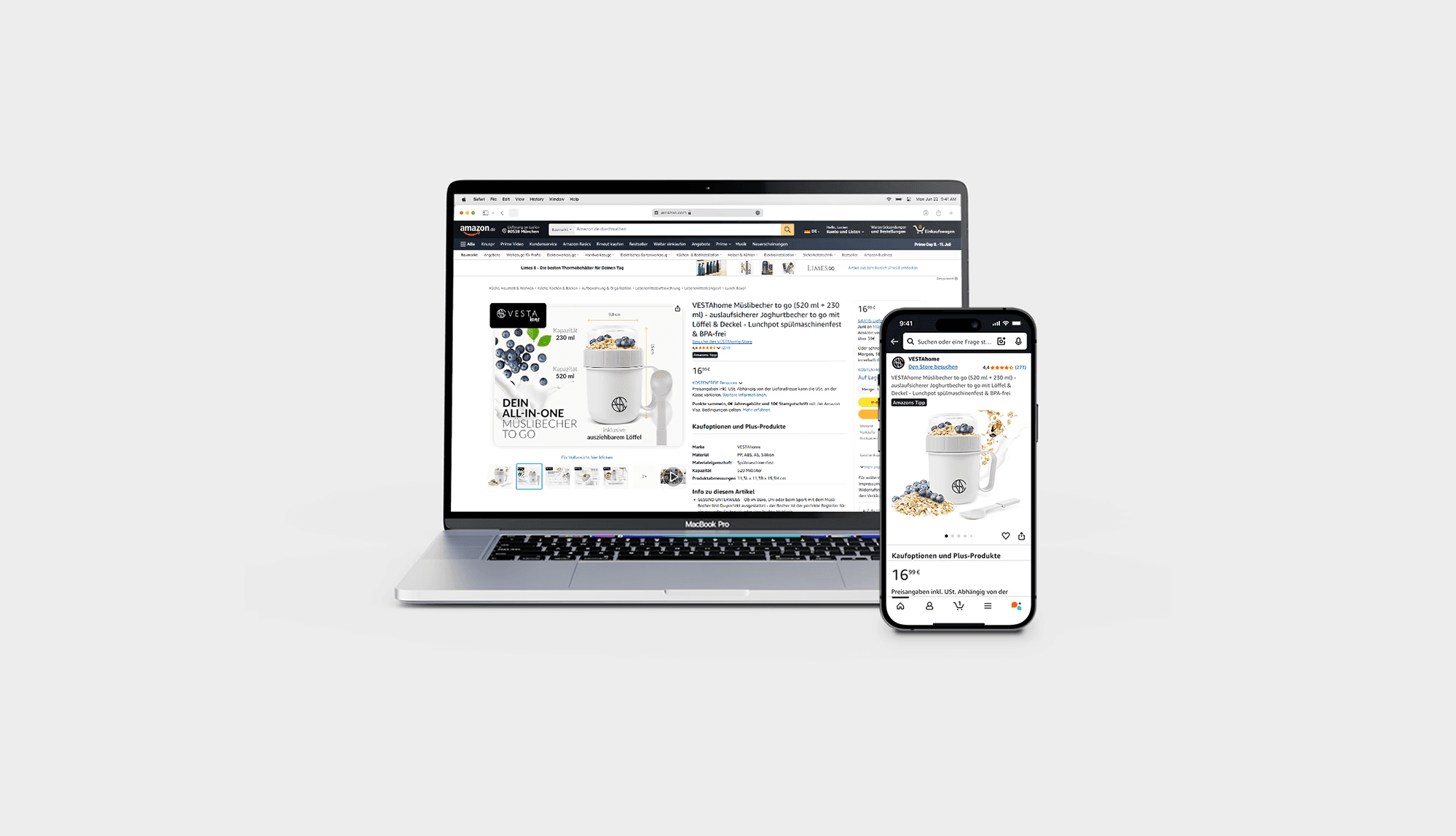
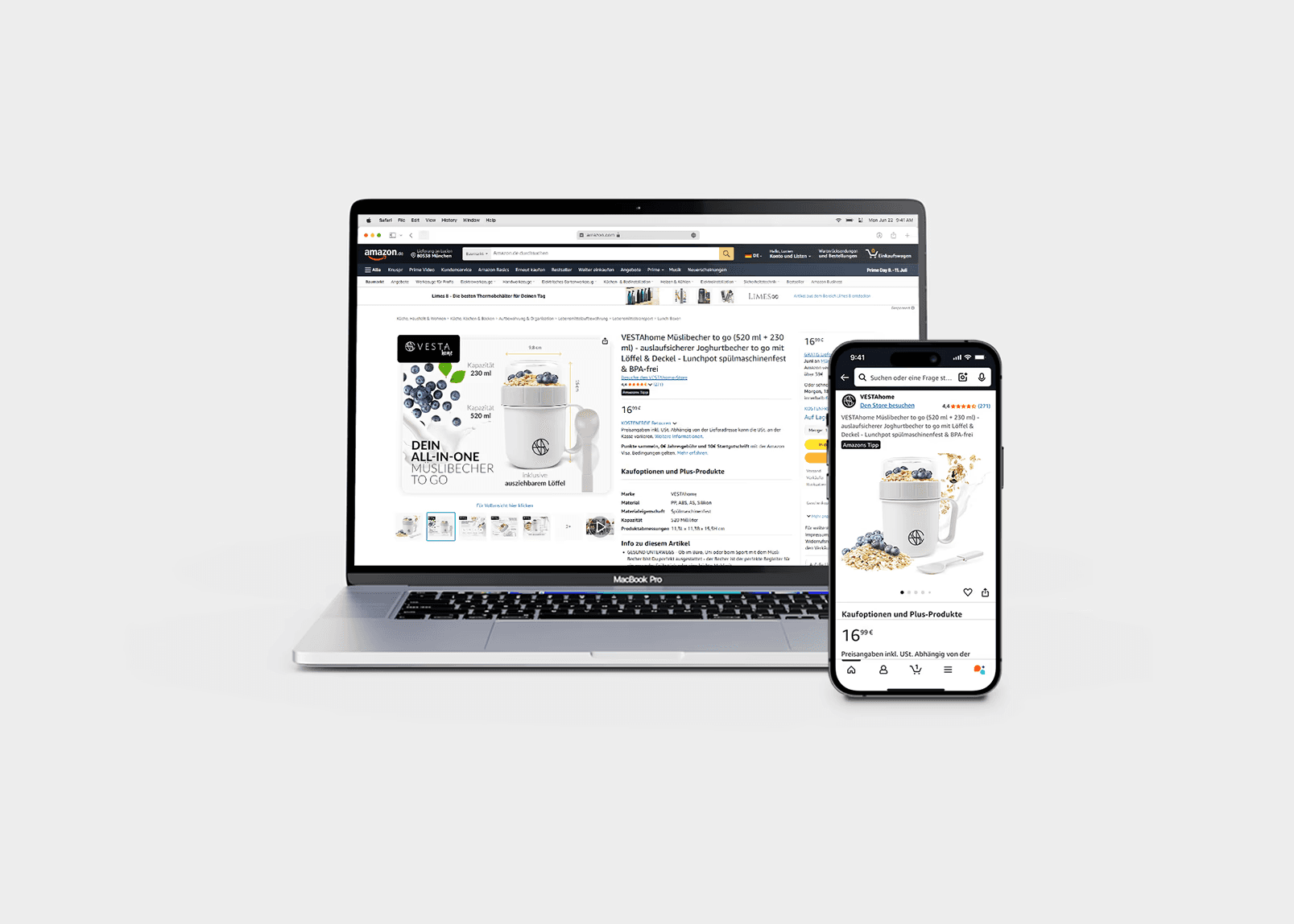
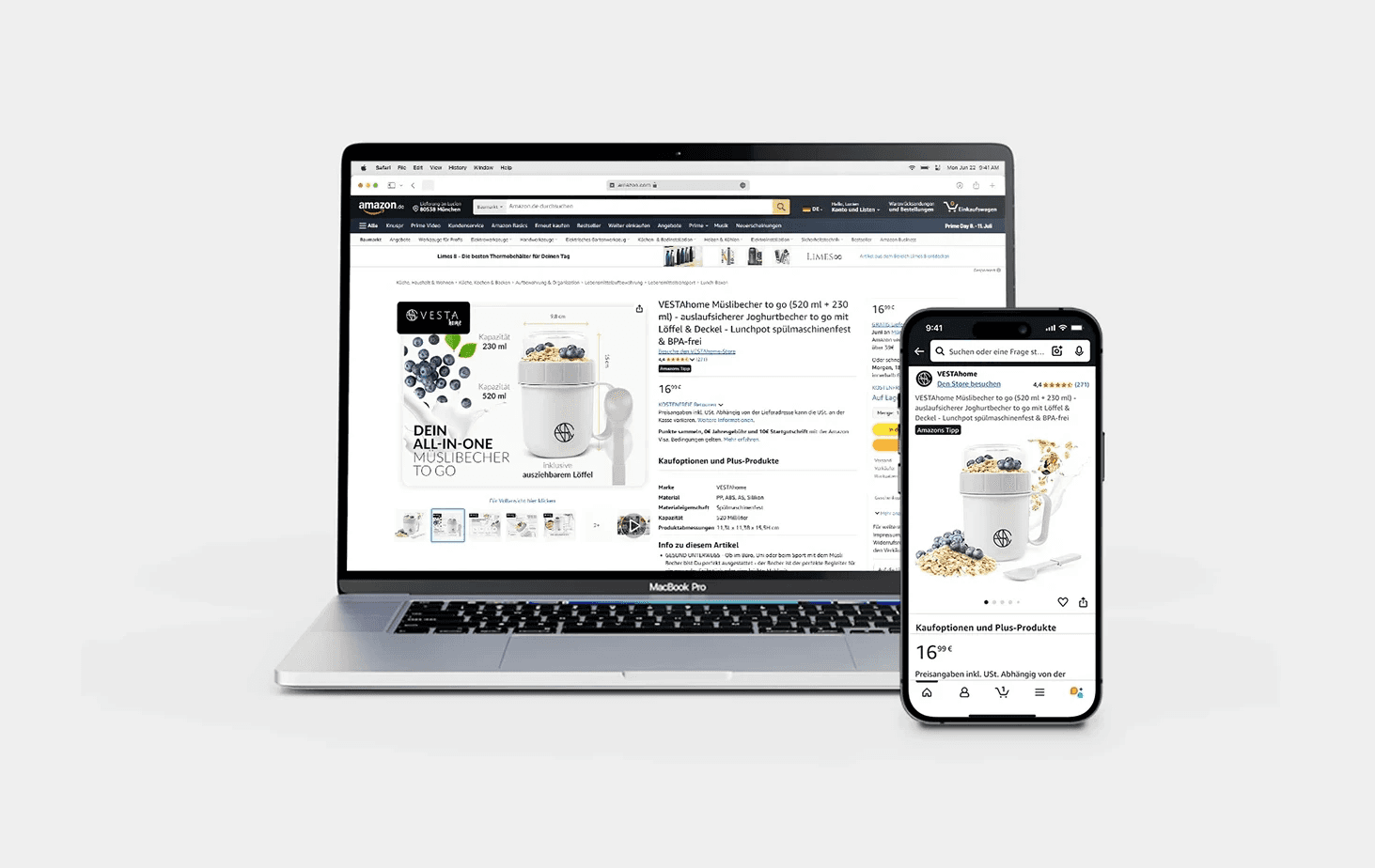
The visual and strategic approach is illustrated using sample mock-ups and before-and-after comparisons, from the concept template to the implemented brand.
Impact Overview
Impact
Text
Impact
Text
Impact
Text
PROBLEM
At the outset, there was a lack of defined standards, an experienced team and external resources. Content was produced unsystematically, and there were no reusable templates or processes.
The goal was to build a flexible, scalable system with clear workflows, integrated quality assurance and a strategic design approach for the entire department.
SOLUTION
SYSTEM ARCHITECTURE & UX-Logic
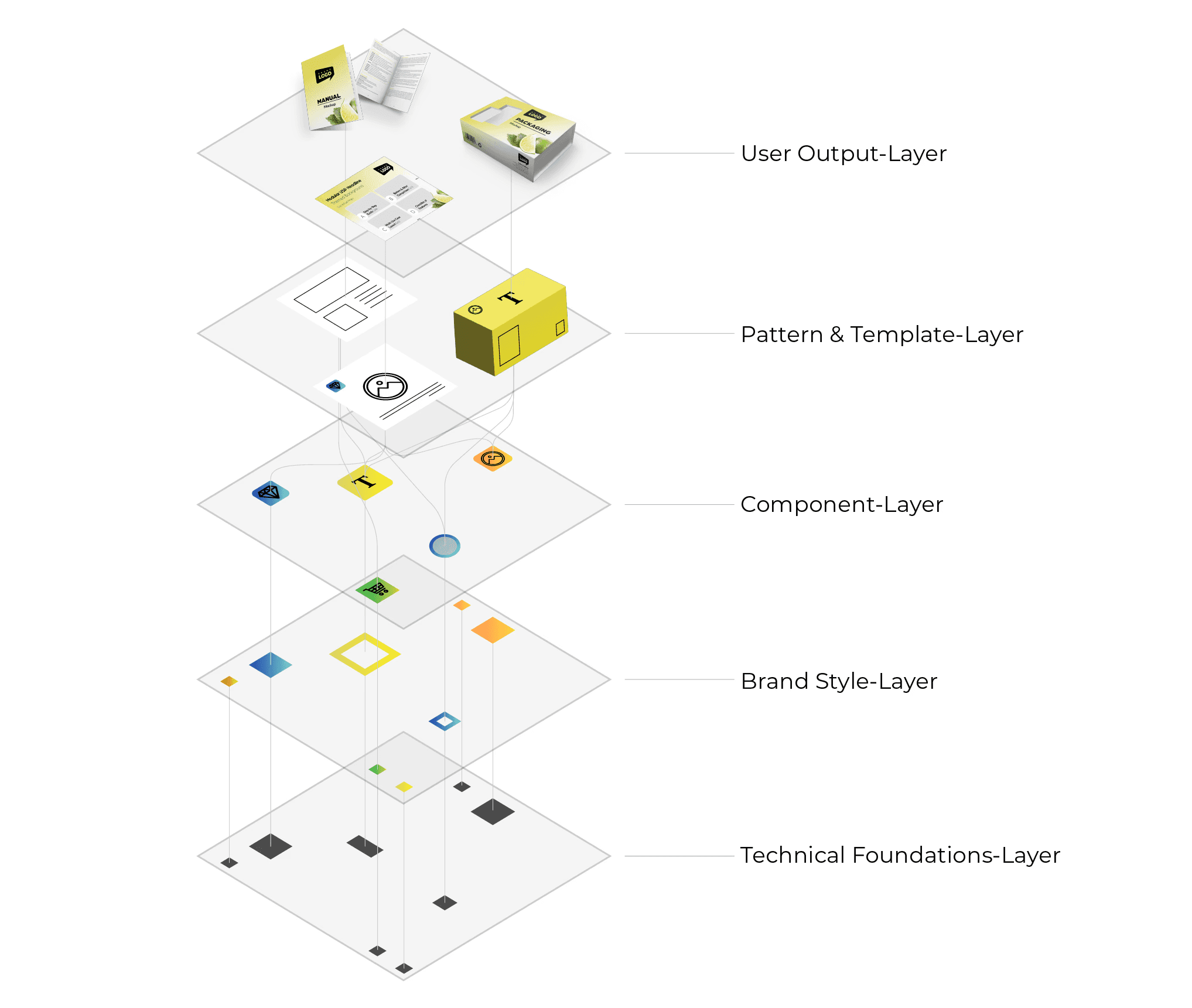
The content system follows a multi-layered architecture that systematically combines technical specifications, design flexibility and brand-specific design, drawing inspiration from UX system framework principles:
Technical Foundations level: technically neutral design tokens (colours, typography, spacing, grids)
Brand Style level: application and interpretation of these styles in accordance with CI and brand guidelines
Component level: smallest visual units such as product images, icons, labels, CTAs or props
Pattern & Template level: modular assets such as listing images, A+ banners, packaging, instructions
User Output level: visual displays on Amazon from the product detail page to the brand store
The design follows modern web design principles: mobile-first, clear hierarchies and targeted depth effect. Within the system, all brands share the same structural framework with tokens, components and templates, but retain their visual independence through specific colour schemes, typography and imagery.
In this way, consistency is combined with recognisability, and each brand remains clearly distinguishable despite systematic logic. This systematic structure forms the basis for consistency, reusability, efficiency and a scalable brand experience across all touchpoints.
BRANDS & PRODUCTS LIVE ON AMAZON
IMPACT & OUTCOME
Built and managed a 9-person design team; negotiated, implemented and managed external partner agencies (copy writing, marketplace assets, 3D visuals).
Introduced internal monthly design returns tracking: tracked all design results, customer feedback and errors from team/manufacturer handovers.
Reduced rate from >28% to <6% in 7 months (since July 2021).
Optimised approval processes and stabilised cross-team handovers.
Introduced systematic design reviews, clear design standards and defined approval processes to reduce sources of error.
Increased efficiency, consistency and brand perception.
Standardised and scaled content operations.
Reduced production costs by ~50% and time-to-market from 6-8 to ~3 weeks by switching from product photography to scalable 3D visuals.
Up to 30% listing conversion increases (depending on niche/ranking/listing quality) through hypothesis-driven product image optimisations (metric tracking, product image A/B testing, heat mapping).
B2B content rollout for 60+ brands and 1,800+ products in (USA & EU).
This case study illustrates how a component-based content system, stringent design management and data-driven working methods lead to consistent, scalable results.
This is particularly true in the dynamic environment of international marketplaces such as Amazon. Today, the system forms a robust foundation for future content production with high brand loyalty and operational efficiency.